
NYC Bus, Subway, and MTA Accidents: The 90-Day Notice of Claim Trap
May 09, 2026
Reviewed by Alexander Karasik, Esq., Personal Injury Attorney | 19+ Years Experience | Super Lawyers 2021-2024 | Last Updated: April 2026
New York is NOT a strict-liability dog bite state. Under what is commonly called the “one-bite rule,” dog owners are liable for injuries from a bite only if the victim can prove the owner knew or should have known their dog had a “vicious propensity.” For medical bills alone, owners have liability regardless of prior knowledge. Most claims are paid by the owner’s homeowner’s, renter’s, or condo unit-owner’s insurance, not from their personal assets. New York’s general personal injury statute of limitations of 3 years applies to most dog bite claims; cases involving NYC Housing Authority or other public entities have a 90-day Notice of Claim deadline.
New York’s dog bite law surprises a lot of people who assume “the dog must have bitten before for me to win.” The actual rule is more nuanced than that, and the difference between a winning case and a losing one often comes down to evidence about what the owner knew about their dog before the bite happened.
This guide explains what New York actually requires to win a dog bite case, the limited “medical-bill exception” that does apply regardless of prior bites, who actually pays the claim (almost always insurance, not the owner personally), and what a Brooklyn personal injury attorney does at the start of a dog bite case to build the proof.
New York is one of a small group of states that follow what is called the “one-bite rule,” more accurately described as a “vicious propensity rule.” Under this framework, an injured person can hold a dog owner strictly liable for a bite only if they prove two things:
This rule comes from the New York Court of Appeals decision in Bard v. Jahnke, 6 N.Y.3d 592 (2006), and has been applied consistently since. The phrase “one-bite rule” is somewhat misleading because the dog does not literally have to have bitten someone before. Owner knowledge can be established through other evidence:
New York does have one important exception to the vicious-propensity requirement. Under New York Agriculture and Markets Law § 121, the owner of a “dangerous dog” (a dog that has attacked a person or another animal) is strictly liable for the victim’s medical and veterinary costs, regardless of the owner’s prior knowledge of the dog’s propensities.
This means that even in a “first bite” scenario where the owner had no warning signs:
The practical effect: in most NY dog bite cases, an attorney pursues both theories simultaneously, with § 121 covering medical bills and the common-law vicious-propensity claim covering the larger compensation categories.
One of the most common worries victims have, especially when the bite came from a friend’s, neighbor’s, or family member’s dog, is that pursuing a claim will financially destroy the dog owner personally. In nearly every case, that worry is misplaced.
Dog bite claims in New York are almost always paid by the owner’s insurance:
Some insurance carriers exclude certain breeds (Pit Bulls, Rottweilers, Doberman Pinschers, Akitas, German Shepherds) from coverage entirely or charge higher premiums. If the owner’s policy contains a breed exclusion, the owner can be personally liable, which changes the recovery analysis. An attorney’s first step in a dog bite case is almost always a coverage and exclusion audit.
Bites from dogs on property owned or controlled by NYC Housing Authority (NYCHA), the City of New York, or another municipal entity may add a Notice of Claim deadline that does not apply to bites on private property:
Per Alexander Karasik, Esq., founder of Karasik Law Group, P.C.: “Usually, the case has to be filed within 3 years after the accident, except in a case that involves a NY State, City or the Federal Government, then in those instances a lawsuit must be filed within a shorter time from the date of the accident.”
Specifically, claims against NYCHA or any New York City entity require a written Notice of Claim filed within 90 days under General Municipal Law § 50-e, with the lawsuit itself filed within 1 year and 90 days under § 50-i. The 90-day clock starts on the date of the bite, not the date you decide to consult an attorney.
The first 24 to 48 hours after a dog bite are the most important for both your health and the future case:
“Generally, many different types of damages may be recovered in a personal injury case. Damages are usually divided into economic (out of pocket losses) and non-economic (i.e. loss of enjoyment of life, or wrongful death) damages. For example, here are some of the damages that can be recovered in a personal injury case: pain and suffering, lost wages, past and future medical expenses, and loss of future earning capacity.”
Alexander Karasik, Esq., Founder, Karasik Law Group, P.C.
The full range of personal injury damages applies to dog bite cases in New York, though the recovery framework depends on which legal theory applies:
Children frequently have higher recoveries in dog bite cases because facial bites are more common (children are at face level with many dogs), scarring affects them throughout their growth and development, and courts factor in the long-term psychological impact.
Many dog bites in NYC involve a family member’s, friend’s, or neighbor’s dog. The relationship can make people reluctant to file a claim. Two things to keep in mind:
The financial reality is almost always that filing a claim allows the bite victim to receive medical care and compensation without bankrupting the owner. Quietly absorbing the cost personally usually means the victim ends up with bills the owner’s insurance was already obligated to pay.
Karasik Law Group, P.C. is a personal injury law firm at 3374 Shore Parkway, Floor 1, Brooklyn, NY 11235. The firm is led by Alexander Karasik, Esq., who has approximately 19 years of personal injury experience and has been recognized in Super Lawyers 2021-2024. Karasik Law Group serves all five NYC boroughs and New Jersey, and the firm communicates in English, Spanish, Russian, Uzbek, and Georgian.
If you or your child was bitten by a dog anywhere in Brooklyn or NYC, contact our office for a free consultation. Per Karasik: “We advance all costs of litigation and work on contingency fees in personal injury, construction accident, wrongful death and medical malpractice actions. This means, clients don’t pay anything unless and until there is recovery.” We will meet you anywhere convenient, including your home or hospital room.
Or call (929) 444-4444
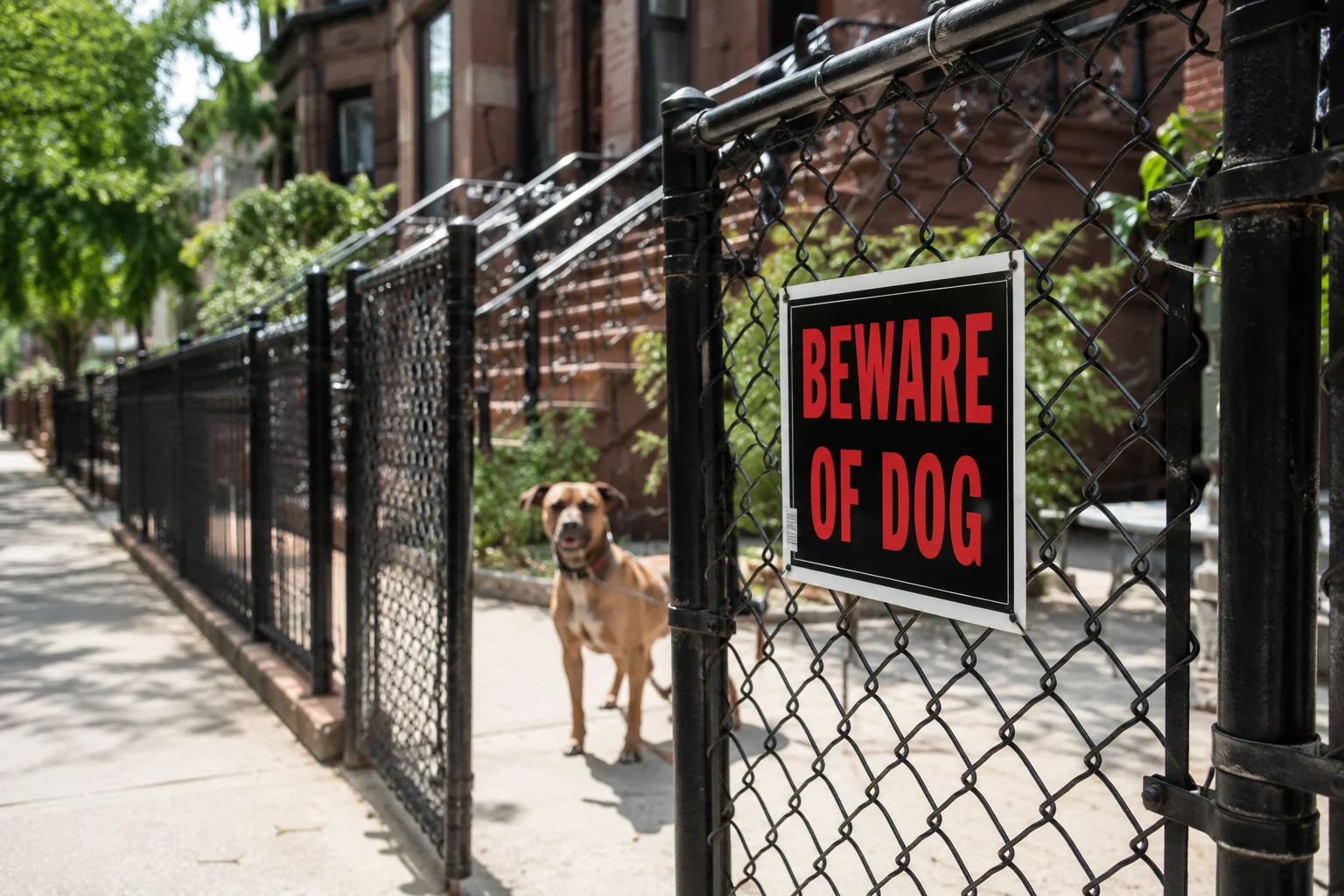
No. The dog does not literally need a prior bite. What matters is whether the owner knew or should have known about the dog’s “vicious propensities” (any tendency to attack, bite, lunge, growl aggressively, or behave dangerously). Evidence of prior aggression short of a bite, “Beware of Dog” signs, the dog being kept restrained or muzzled, neighbor complaints, or animal-control reports can all establish owner knowledge.
Yes. Under New York Agriculture and Markets Law § 121, the owner of a “dangerous dog” is strictly liable for the victim’s medical and veterinary costs regardless of the owner’s prior knowledge. Pain and suffering and lost wages still require proving the common-law vicious-propensity rule.
Almost never. Most homeowner’s, renter’s, and condo unit-owner policies include personal liability coverage that pays dog bite claims. The insurance company writes the check, not your friend or family member. Premium adjustments are possible but personal financial liability is rare.
That declaration is strong evidence supporting both the § 121 strict-liability claim and the vicious-propensity element of the common-law claim. It does not automatically guarantee compensation, but it shifts the evidentiary picture significantly in the victim’s favor.
Generally, 3 years from the date of the bite under CPLR § 214(5). If the bite occurred on NYC Housing Authority property or other municipal property, a written Notice of Claim is required within 90 days under General Municipal Law § 50-e, and the lawsuit must be filed within 1 year and 90 days. Cases involving children may have additional tolling considerations.
Nothing upfront. Per Karasik: “We work on contingency fees in personal injury, construction accident, wrongful death and medical malpractice actions. This means, clients don’t pay anything unless and until there is recovery.” The firm advances all costs of litigation.
This article is for informational purposes only and does not constitute legal advice. Consult a qualified attorney for guidance on your specific situation.